Development is often measured in averages. But averages can be misleading. If one community progresses at 90 and another struggles at 30, the average may appear acceptable—yet it fails the very people who need support the most. The same solution cannot serve both.
Real impact begins when we stop designing for the “average” and start responding to lived realities. Croasis Research Group was founded with this understanding.
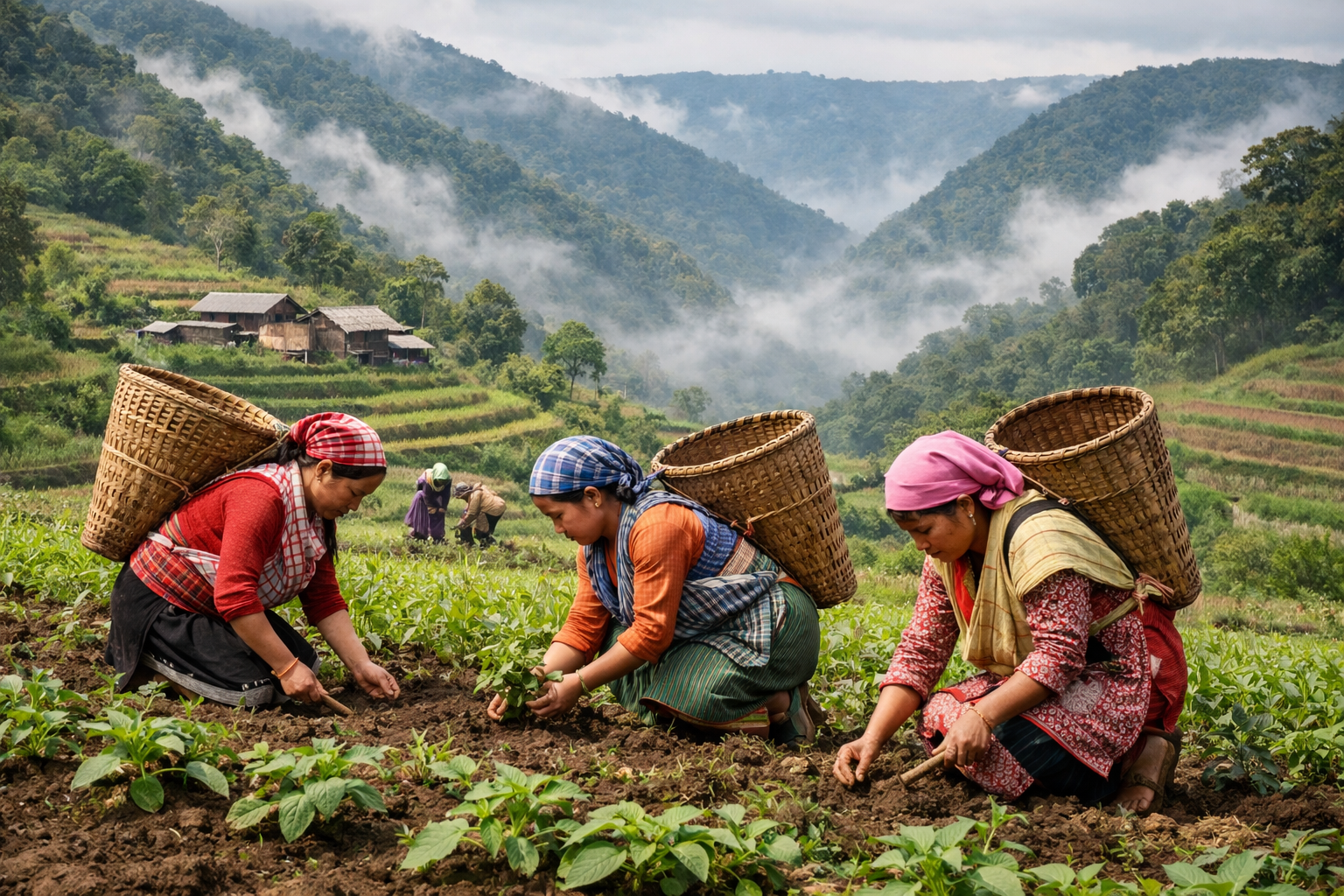
Across Meghalaya and other ecologically and socially sensitive regions, communities face deeply interconnected challenges: fragile healthcare access, stressed ecosystems, limited livelihood opportunities, gaps in education, and the growing impact of climate change. These challenges are intensified by difficult terrain, remoteness, and the absence of systems designed for such contexts.
Mainstream models often overlook these realities, leaving entire communities outside the sphere of meaningful impact. Croasis Research Group exists to work precisely in these spaces.
Across all these thematics, our approach remains the same: community partnership, context-sensitive design, and solutions built for those left out of “average impact.” We do not replicate models, we adapt them. We do not chase scale alone; we prioritize relevance, depth, and sustainability.
"Impact is measured not by averages, but by lives improved, systems strengthened, and communities empowered."
Because development is meaningful only when it reaches those who need it most.
Our work spans six interconnected thematics, each responding to a critical gap where conventional approaches fall short.
We begin with Agroecology and Plantation, recognizing that land, water, and food systems form the foundation of community resilience. Through agroforestry and innovative plantation techniques that require minimal water, we help restore degraded land, improve soil health, conserve biodiversity, and strengthen long-term agricultural productivity.
In Healthcare, we address access as a journey, not just a facility. In the remote hills of Meghalaya, distance and terrain often turn basic care into a life-threatening challenge. Croasis Research Group designs decentralized, community-linked healthcare facilities and systems that bring care closer to people, ensuring dignity, safety, and continuity even in the hardest-to-reach locations.
Education is approached as a continuum from early childhood to youth skill development. We work alongside schools, families, and governments to identify learning gaps and co-design solutions that reflect local realities. These efforts strengthen school readiness, remedial learning, and future livelihood pathways.
Through Livelihood Models, we focus on building economic resilience without compromising ecological balance. By linking nature-based solutions with income generation—such as regenerative land management and climate-smart agriculture—Croasis Research Group helps communities create sustainable livelihoods that endure.
Our Climate Action work recognizes that environmental degradation and climate change are already lived experiences for vulnerable communities. By enabling reforestation, land restoration, and low-water ecological solutions, we support carbon sequestration, ecosystem resilience, and climate adaptation at the local level.
Finally, Training and Skill Development ties all our thematics together. Through hands-on, field-based learning, we equip farmers, youth, and entrepreneurs with practical skills from sustainable farming to value addition and enterprise development ensuring knowledge translates into real-world impact.